The problem
Technique feedback is easy to miss in real time — especially once fatigue sets in and form starts to drift.
01 / Projects
StrokeScore AI started with a rower’s question: what does a stroke conceal that’s worth measuring?
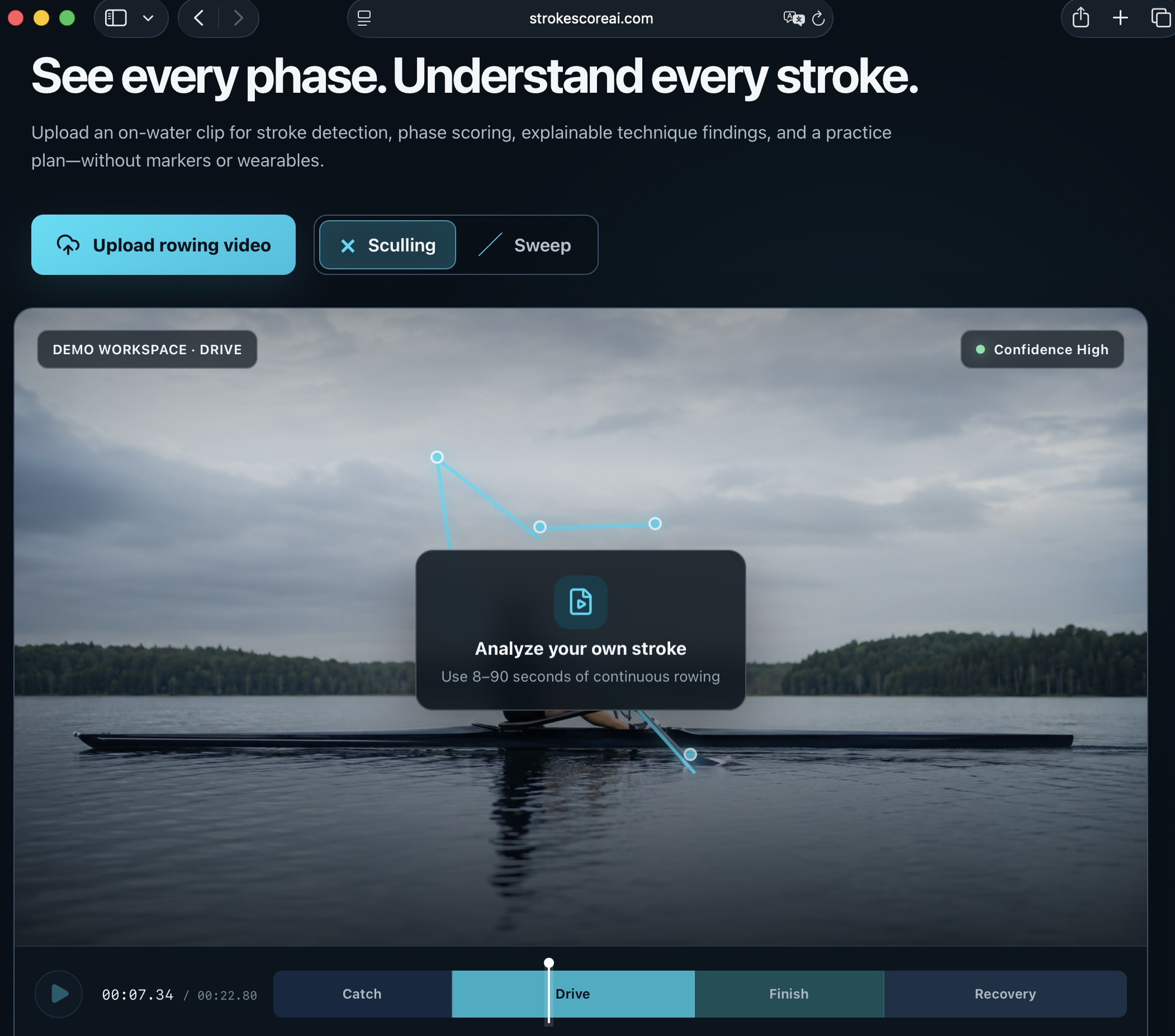
Main project / in development
A video and pose-estimation project that looks for the joint-angle, timing, and asymmetry patterns a coach’s eye can miss.
Explore StrokeScore AI ↗From question to prototype
Technique feedback is easy to miss in real time — especially once fatigue sets in and form starts to drift.
Could pose estimation turn a side-on video into something more specific than a feeling that something’s off?
I explored joint tracking, stroke phases, angles, motion trails, and the differences between sculling and sweep.
A tool that overlays explainable movement data directly onto a rower’s own video — angles and timing, not a black-box score.
A visualization can start a better conversation with a coach. It isn’t a substitute for one.
Camera angle, occlusion, individual body types, and context all limit what a model can actually know.
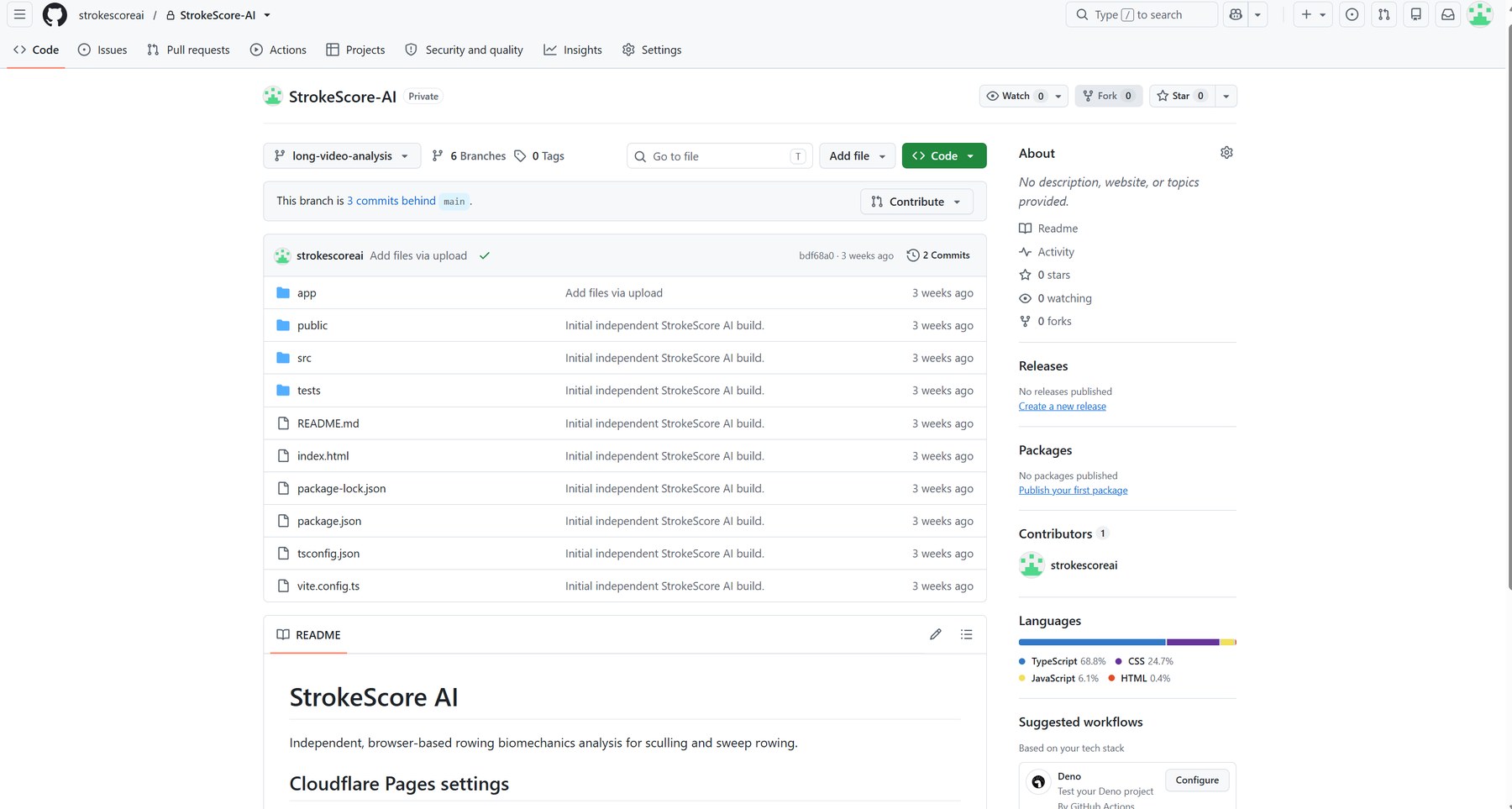
StrokeScore AI is an experiment in seeing movement more clearly — not a medical device, a finished coaching product, or a replacement for a coach’s or clinician’s judgment. Technique and training decisions still belong to the people who know the athlete and the water.
What’s next
Long-term, I want to understand how injuries develop and how technique shapes performance well enough to help athletes improve without sacrificing their health. StrokeScore AI is a first step, not the whole answer.